

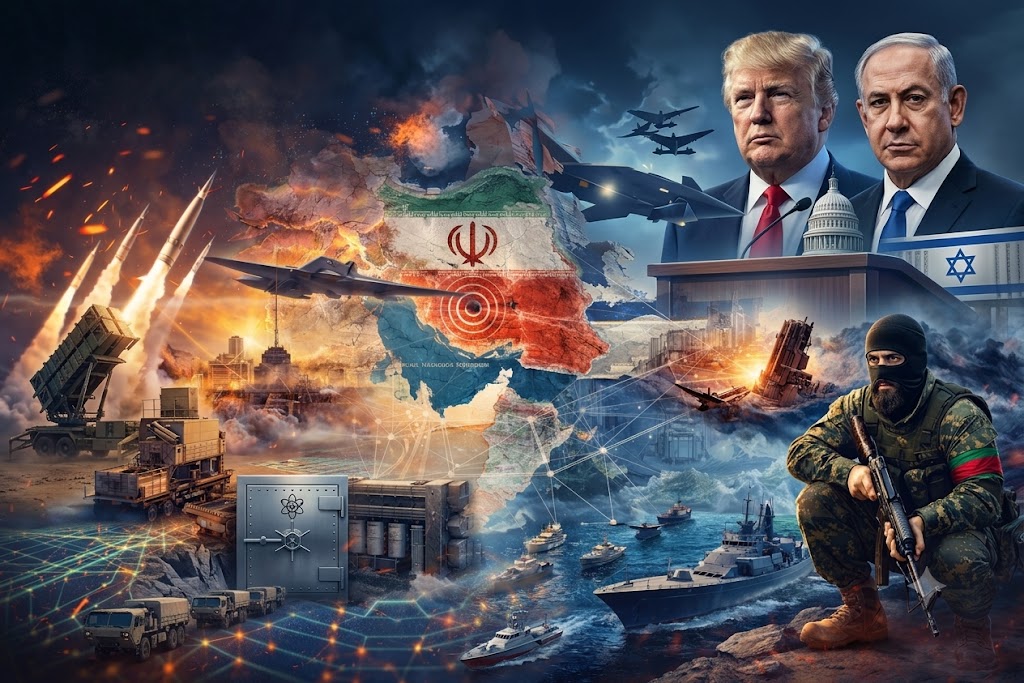
For decades, the geopolitical friction between the United States and the Islamic Republic of Iran has been one of the primary axes of instability in global politics. What began as a close strategic alliance in the mid-20th century has morphed into a complex, multi-layered proxy war. Today, this rivalry shapes everything from global oil prices to the security architectures of the Middle East and Europe.
To understand the modern geopolitical chess match between Washington and Tehran, one must look at the structural drivers behind their ongoing confrontation.
1. The Core Ideological and Strategic Divide
The modern conflict is rooted in the aftermath of the 1979 Islamic Revolution, which transformed Iran from a pro-Western monarchy into a fiercely anti-imperialist clerical state.
-
Washington’s Lens: The United States views Iran as a destabilizing force, a state sponsor of terrorism, and a direct threat to its core regional allies—principally Israel and Saudi Arabia—as well as the free flow of commerce through vital maritime choke points.
-
Tehran’s Lens: Iran views the pervasive U.S. military presence in the Middle East (across bases in the Gulf, Iraq, and Syria) as an existential threat. Its foreign policy is designed around “strategic depth”—pushing threats away from its borders by establishing influence across the region.
2. The Battleground of Proxies: The “Axis of Resistance”
Because a direct military conflict carries catastrophic costs for both sides, the US-Iran rivalry is primarily fought through asymmetric warfare and proxies. Iran has masterfully cultivated a network of non-state actors known as the Axis of Resistance.
The U.S. counters this network by providing billions in military aid to Israel, maintaining defensive pacts with Gulf Arab states, and conducting targeted airstrikes to deter militia aggression.
3. The Nuclear Question and Sanctions Warfare
At the heart of the diplomatic gridlock is Iran’s nuclear program. The landmark 2015 Joint Comprehensive Plan of Action (JCPOA)—which curbed Iran’s nuclear enrichment in exchange for sanctions relief—was crippled after the U.S. unilaterally withdrew from the pact in 2018.
Since then, the U.S. has relied heavily on “Maximum Pressure“ economics, enforcing stringent sanctions that cut Iran off from the global banking system and heavily restrict its oil exports.
In response, Tehran has pushed its uranium enrichment closer to weapons-grade levels while shifting its economic focus. Iran has successfully bypassed Western isolation by deeply integrating itself into an anti-Western economic bloc, solidifying massive energy and military partnerships with China and Russia.
4. Choke Points and Global Energy Security
Geopolitics isn’t just about politics; it is about geography. Iran sits directly on the Strait of Hormuz, a narrow waterway through which roughly one-fifth of the world’s total petroleum consumption passes daily.
Any escalation in the Persian Gulf instantly triggers panic in global markets. Iran has periodically utilized its naval capabilities to seize Western-linked commercial tankers or threaten to shut down the strait entirely, using the global economy’s reliance on oil as a powerful tool of deterrence against further U.S. military action.
Conclusion: A Horizon of Perjury or Peace?
The geopolitical deadlock between America and Iran remains a volatile waiting game. With diplomatic channels largely frozen and both nations deeply entrenched in their respective strategies, the risk of miscalculation remains dangerously high.
A single unauthorized drone strike or a misinterpreted naval maneuver in the Gulf could easily ignite a wider regional conflagration. For the foreseeable future, the U.S. and Iran seem destined to remain locked in this fragile state of deterrence—neither willing to trigger an all-out war, yet neither ready to extend the olive branch.