

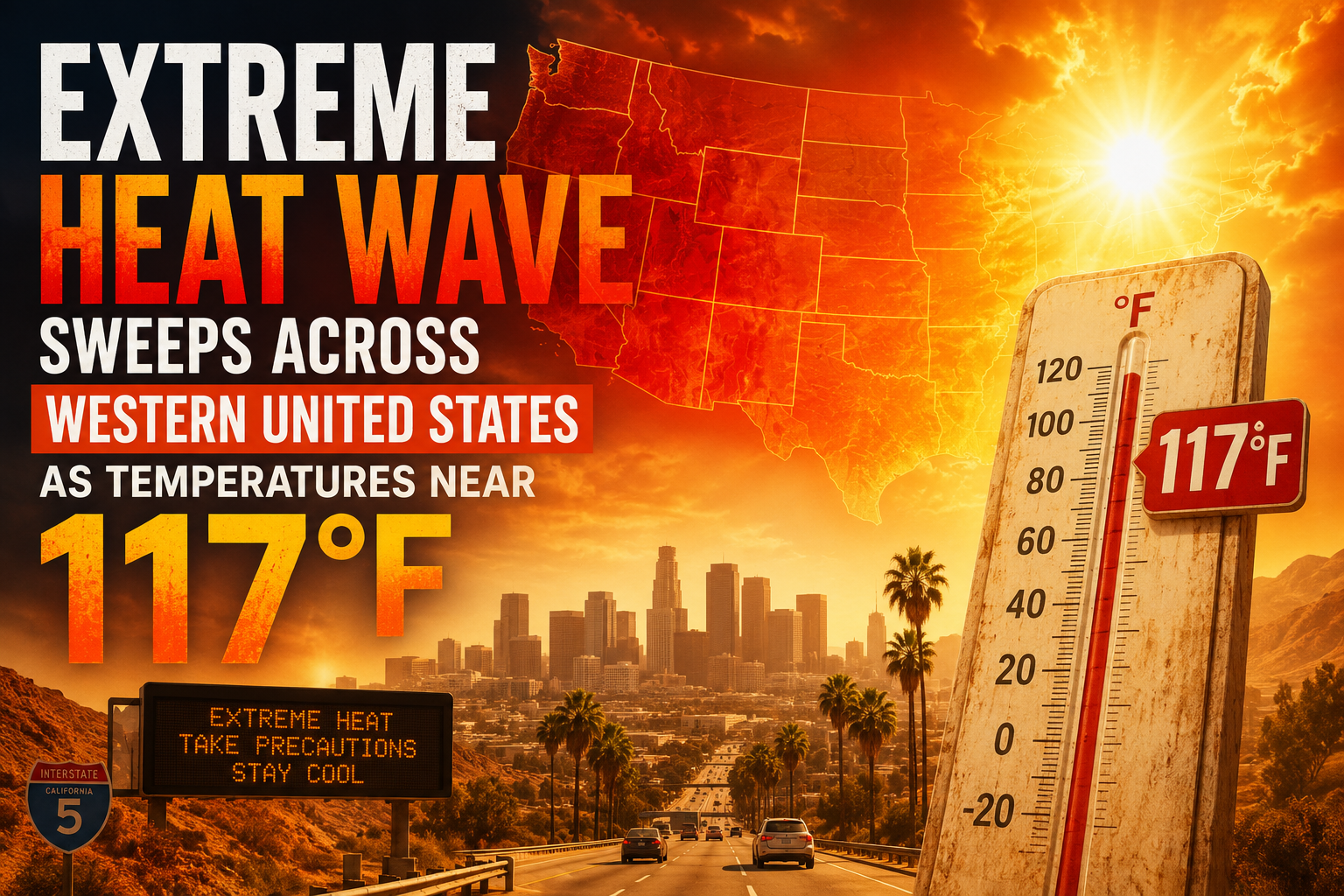
A dangerous heat wave continues to grip large portions of the western United States, with forecasters warning that temperatures could reach as high as 117°F (47°C) in some desert regions. The prolonged period of extreme heat has prompted local authorities to issue health advisories, open cooling centers, and encourage residents to limit outdoor activities during peak daytime hours. Recent forecasts indicate the heat will persist across several western states through the coming days.
Millions Face Dangerous Heat Conditions
Meteorologists report that high-pressure systems remain firmly established over the western region, preventing cooler air from entering affected areas. Cities across Arizona, Nevada, California, and parts of Utah continue experiencing temperatures well above seasonal averages.
Public health officials have emphasized that prolonged exposure to extreme heat significantly increases the risk of heat exhaustion and heat stroke, particularly for older adults, young children, and individuals with underlying medical conditions.
Emergency Measures Expanded Across Several States
State and local governments have introduced multiple emergency measures designed to reduce health risks during the heat event.
Cooling Centers Open
Many municipalities have extended operating hours for public cooling centers, libraries, and community facilities to provide safe shelter for vulnerable residents.
Increased Medical Readiness
Hospitals and emergency response agencies have prepared for a potential increase in heat-related illnesses by expanding staffing levels and public outreach campaigns.
Officials continue encouraging residents to:
- Stay hydrated throughout the day.
- Avoid strenuous outdoor activities during afternoon hours.
- Wear lightweight clothing.
- Check regularly on elderly family members and neighbors.
- Never leave children or pets inside parked vehicles.
Long-Term Adaptation Strategies
Recommended long-term measures include:
- Expanding tree canopy coverage.
- Developing heat-resilient urban planning.
- Improving emergency warning systems.
- Investing in energy-efficient buildings.
- Strengthening public education on heat safety.